By Solomon Wiesen, TLV Beaches. Last reviewed October 2026.
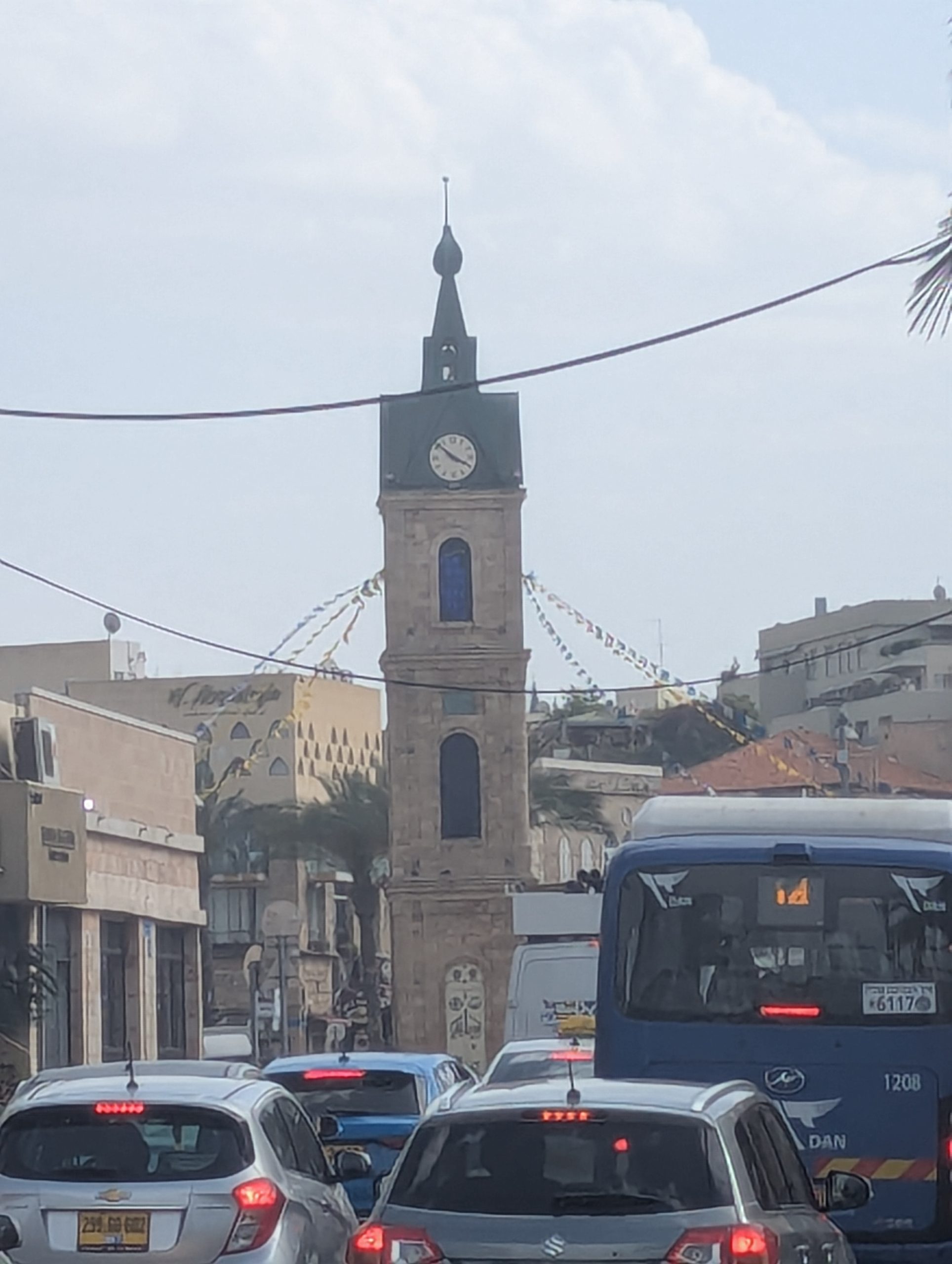
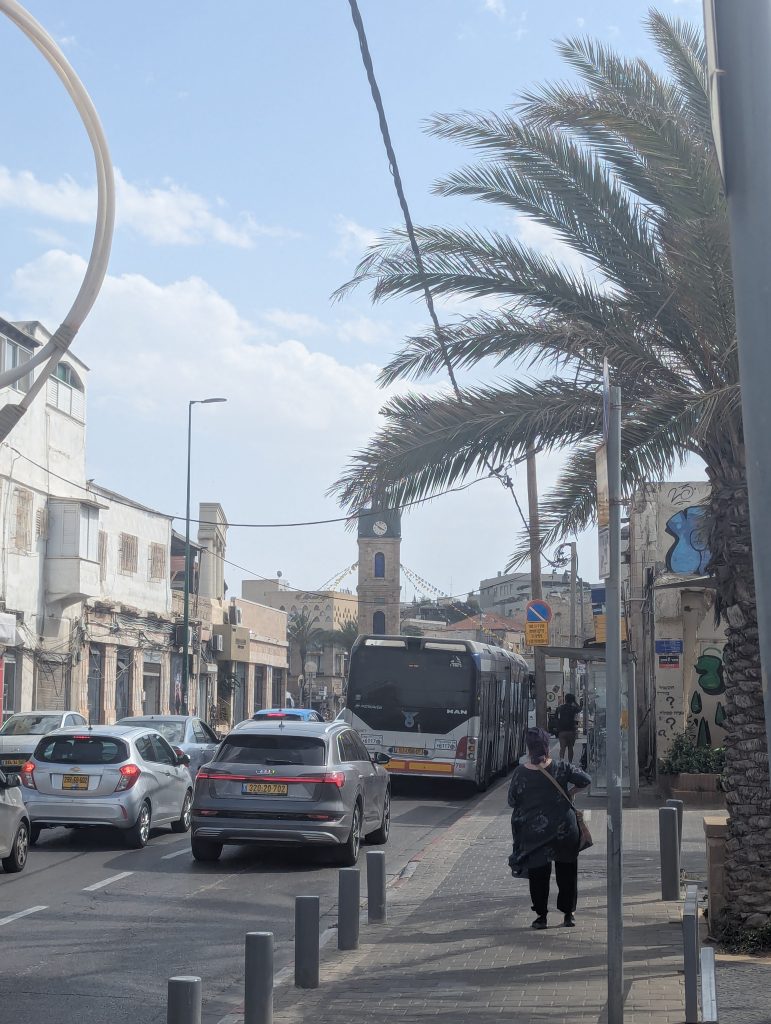
The Jaffa Clock Tower stands in the middle of Clock Square, at the north end of Yefet Street, where Tel Aviv ends and old Jaffa begins. It was built between 1900 and 1903 to mark 25 years of Ottoman Sultan Abdul Hamid II’s reign. It is free to see at any hour, and it is where most walks through Jaffa start.
At a glance
- Where: Clock Square, north end of Yefet Street, Jaffa (Tel Aviv-Yafo)
- Built: cornerstone laid on 1 September 1900, finished in 1903
- Why: the 25th year of Sultan Abdul Hamid II’s reign
- Cost: free; it stands outdoors in a public square
- Nearest light rail: Shalma (Salame) on the Red Line, about 5 to 7 minutes on foot
- Walk to Jaffa Port: about 10 minutes
Jaffa Port is about a 10 minute walk; Shalma light rail station is 5 to 7 minutes.
Source: Tel Aviv-Yafo Municipality, the heritage sign and the Israel Antiquities Authority, checked October 2026.
History of the Jaffa Clock Tower
The cornerstone was laid on 1 September 1900 and the tower was finished in 1903. It was paid for by the people of Jaffa, Arabs and Jews, and the family of the Jewish businessman Joseph Bey Moyal was among the main donors. English-language accounts also credit Jaffa’s Armenian and Maronite communities.
The occasion was the silver jubilee of Sultan Abdul Hamid II. The Ottomans marked it with clock towers across the empire, and the Israel Antiquities Authority counts six in this country: Jaffa, Acre, Haifa, Safed, Nablus and Jerusalem, where the tower was taken down in 1922.
The tower was renovated in the 1960s, when the artist Arie Koren added decorative metal grilles and stained glass showing scenes from Jaffa’s history. It was restored again in 2001, when the clock was restarted. The clock stopped in 2021 and was running again by 1 January 2022.
What to Look For
- The clocks: the tower has three stories and two clock faces today.
- The sultan’s seal: each side carries a tughra, the calligraphic seal of Abdul Hamid II. Only the one on the south face is the original marble, conserved by the Israel Antiquities Authority in 2016. The other three are glass replicas from the 2001 restoration.
- The grilles and windows: Arie Koren’s panels tell Jaffa’s story in pictures.
- The plaque: placed in 1953 in memory of the Irgun (Etzel) fighters who fell in the battle for Jaffa in 1948.
How to Get to the Jaffa Clock Tower
- Light rail: the nearest station is Shalma (Salame) on the Red Line, about 5 to 7 minutes away on foot.
- Bus: the HaShaon Square stop is right beside the tower.
- On foot from Tel Aviv: follow the seaside promenade south past Charles Clore Beach and turn inland at the entrance to Jaffa.
What Is Near the Clock Tower?
- Around the square: the Saraya, the old Ottoman government house, is across the square. The former Kishle police station, now the Setai hotel, is about 60 meters away, and the Abulafia bakery is just down Yefet Street.
- Jaffa Flea Market: about 200 meters from the tower.
- To Jaffa Port: head south along Yefet Street for about 400 meters, then turn right onto Louis Pasteur Street. It is about a 10-minute walk.
- To Ajami (Givat Aliyah) Beach: about 2.2 km south, roughly 30 minutes on foot. This is Jaffa’s declared swimming beach.
Source: Tel Aviv-Yafo Municipality and the Israel Antiquities Authority, checked October 2026.
The streets around the Jaffa Clock Tower show the city’s layers of history, and it is an easy stop on any day in Jaffa.
Sources: the Tel Aviv-Yafo Municipality’s tourist information page, the heritage sign at the tower and its memorial plaque (Hebrew), and the Israel Antiquities Authority’s 2016 note on conserving the sultan’s seal. Walking times are measured on the map. Checked October 2026.

Solomon (Shlomo) Wiesen is the author and photographer behind TLV Beaches. Originally from New York, he moved to Israel in 2011 and lives in Tel Aviv, a short walk from Frishman and Bograshov beaches. Every guide on the site is written from the beach, with more than 200 of his own photos of the Tel Aviv coast. He works in marketing, SEO and startups.
Leave a Reply