
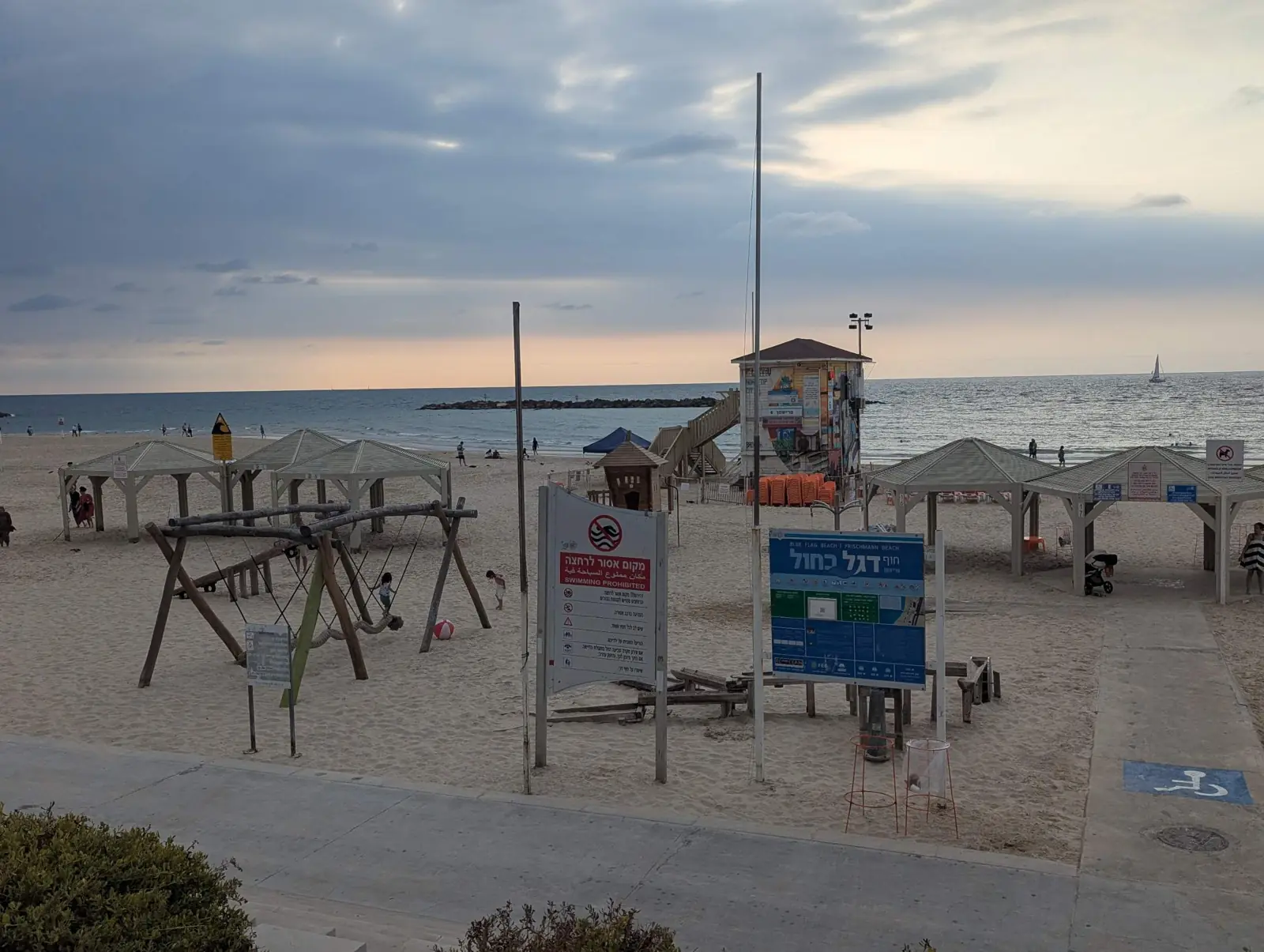
By Solomon Wiesen, TLV Beaches. Last reviewed October 2026.
Tel Aviv beaches are safe by day if you swim in front of a lifeguard. The two real risks are the sea when no lifeguard is on duty, and bags left alone on the sand. Violent crime on the beach is rare. This guide covers both risks, what to do if something goes wrong, and the numbers to call.

At a glance
- Biggest real risk: swimming without a lifeguard; it is prohibited when no lifeguard is on duty
- Lifeguards: at the 13 declared beaches, in the bathing season only; the 2026 season ended on 10 October
- Flags: white = bathing permitted; red = restricted, dangerous sea; black = bathing prohibited; purple = jellyfish
- Rip current: swim parallel to the shore or float and signal; never fight it
- Theft: keep bags and phones on you; unattended items do get taken
- Sirens: Tel Aviv has 90 seconds to reach shelter; see our shelter guide
- Emergency numbers: 100 police, 101 ambulance (Magen David Adom), 102 fire, 106 municipal hotline
Outside these hours, and from mid-October to late March, swimming is prohibited.
Source: Magen David Adom via Maariv, Zalul and the Tel Aviv-Yafo Municipality, checked October 2026.
Water safety
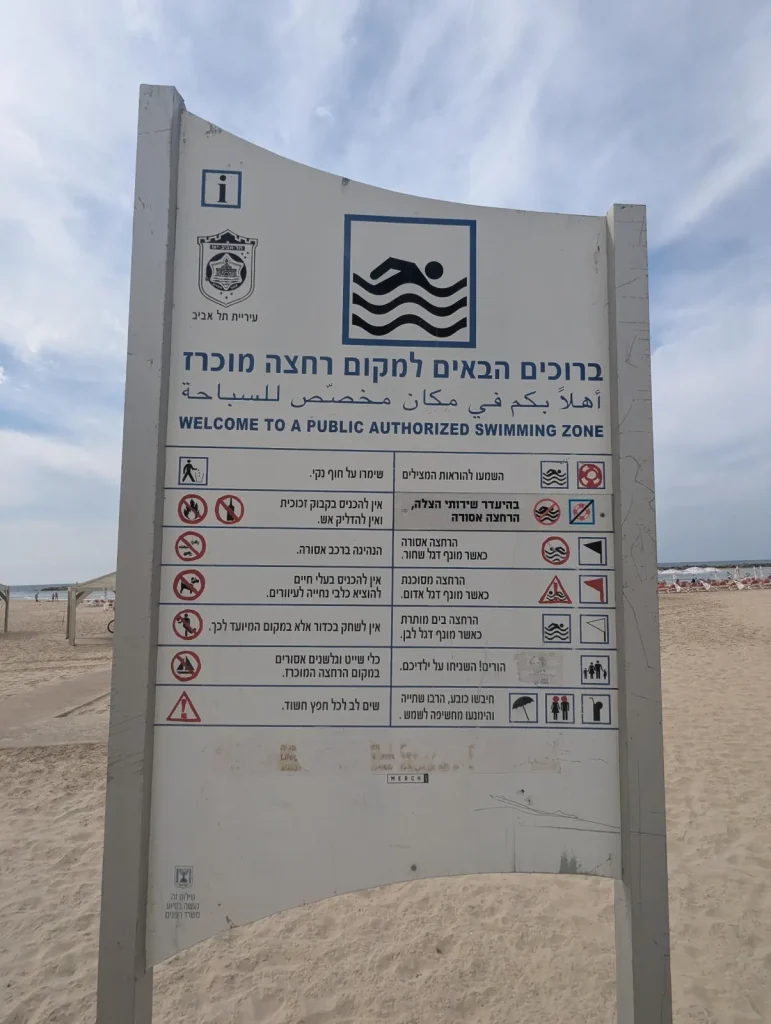
Swim only when a lifeguard is on duty
Tel Aviv’s 13 declared bathing beaches have lifeguard stations, but only in the bathing season and only during set hours. In the 2026 season, which ended on 10 October, they worked from 07:15 until 16:45 in spring and autumn, until 17:45 in June and until 18:45 in July and August. Swimming when no lifeguard is on duty is prohibited, and it is the single most important rule here: Magen David Adom counted 101 drowning incidents and 18 deaths in Tel Aviv-Yafo between 2023 and 2025.

Rip currents
The water can look calm while a rip current runs out to sea. If one catches you, do not swim against it toward the shore: swim parallel to the beach until you are out of it, or float and wave for help. That is the advice of the city’s chief lifeguards. Weak swimmers should stay in the shallows, and nobody should swim alone, after drinking, or in strong wind.
Winter waves
Winter storms can push waves to around 3 meters (10 feet), and there are no lifeguards on the beaches between the end of the season in October and the spring. Check the beach flags before you go in: white means bathing is permitted, red means restricted because the sea is dangerous, black means no bathing, and purple is a jellyfish warning.
Marine life
- Jellyfish, mainly the nomad jellyfish, which swarm in June and July and give a painful sting. Rinse a sting with seawater, do not rub it, and do not use vinegar.
- Sea urchins on rocky stretches, which cause painful punctures.
- Moray eels, which look intimidating but are generally not aggressive.
- Sharks are not a Tel Aviv beach problem. They gather in winter by the Hadera power station, well to the north, where a swimmer was killed in April 2025; no attack has been recorded at a Tel Aviv beach since 1945.
Water quality
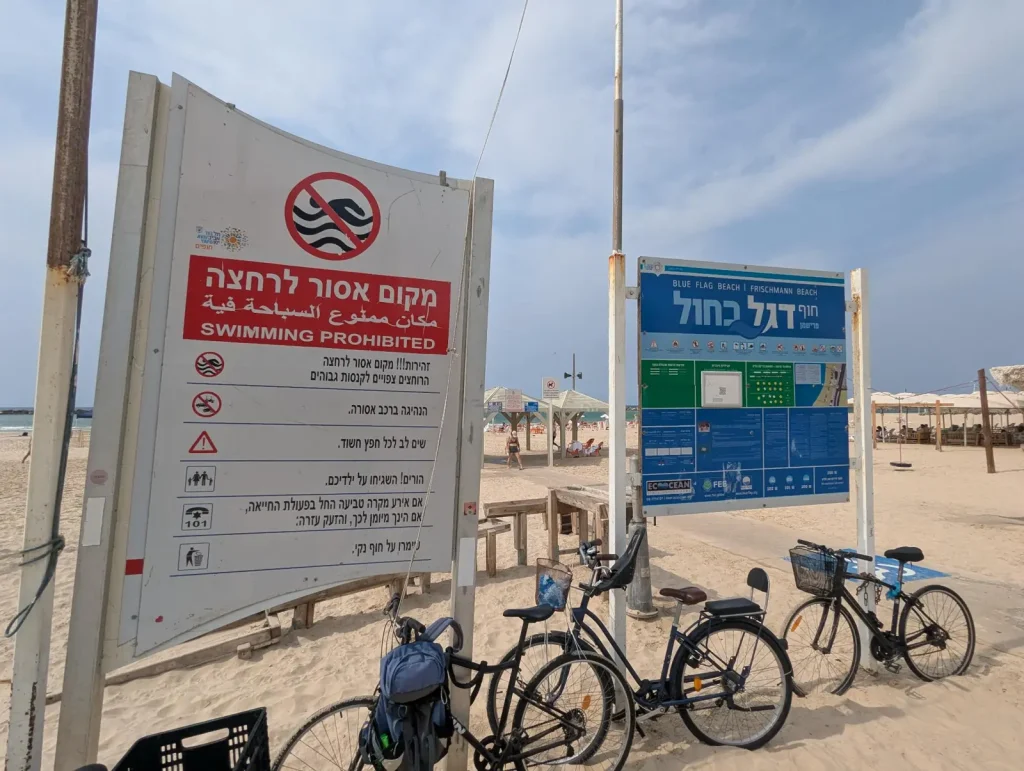
The Health Ministry and the municipality sample the water at the declared beaches every week in season, and close a beach when the bacteria count is too high. That usually happens after rain, when runoff and sewage reach the sea. In 2024, Tel Aviv’s 13 beaches lost 98 beach-days to such closures between them, the most of any city in Israel, according to the environmental group Zalul. If a beach has a closure sign, stay out. More on pollution at the Tel Aviv beaches.
Theft on the beach
Petty theft is the crime visitors actually meet on Tel Aviv beaches. The usual case: someone is lying on the sand or sitting on the promenade with a phone or bag next to them, or the whole group goes in the water. Keep your things in front of you or on you. Avoid three-card monte games and pushy charity collectors on the promenade.

What the record says
Here is what the public record says about theft at Israeli beaches.
- Petty theft follows the crowds. The US State Department’s Overseas Security Advisory Council says petty theft is common in crowded tourist locations, Tel Aviv among them, and that crime tends to increase after dark in high-traffic tourist areas, beaches included.
- Your parked car is the softer target. The same report says break-ins to parked vehicles are common at public beach areas, national parks and other tourist sites. Leave nothing visible, and nothing you care about in the boot.
- Theft is the crime people here actually meet. In the Central Bureau of Statistics victimization survey for 2025, reported in March 2026, 15% of Israelis said they had been a victim of crime, and about 4.5% of households reported burglary or theft from the home, with a similar share reporting vehicle-related crime.
- Beach theft can be organised rather than opportunistic. The clearest documented case comes from Ashdod, not Tel Aviv: in 2012 police broke up a seven-person ring working the city’s beaches, taking cash, phones, jewellery, purses and wallets from bathers, and put its haul at roughly NIS 500,000 over one summer. A kiosk owner caught them by leaving decoy backpacks in sight of his counter. The method travels even if the gang does not: someone watches the sand and picks the bag whose owner is in the water.
Theft prevention checklist
- Bring only what you need. Leave passports, spare cards and extra cash at your hotel or home.
- Use a locker when one is available. It is the safest option if the whole group wants to swim.
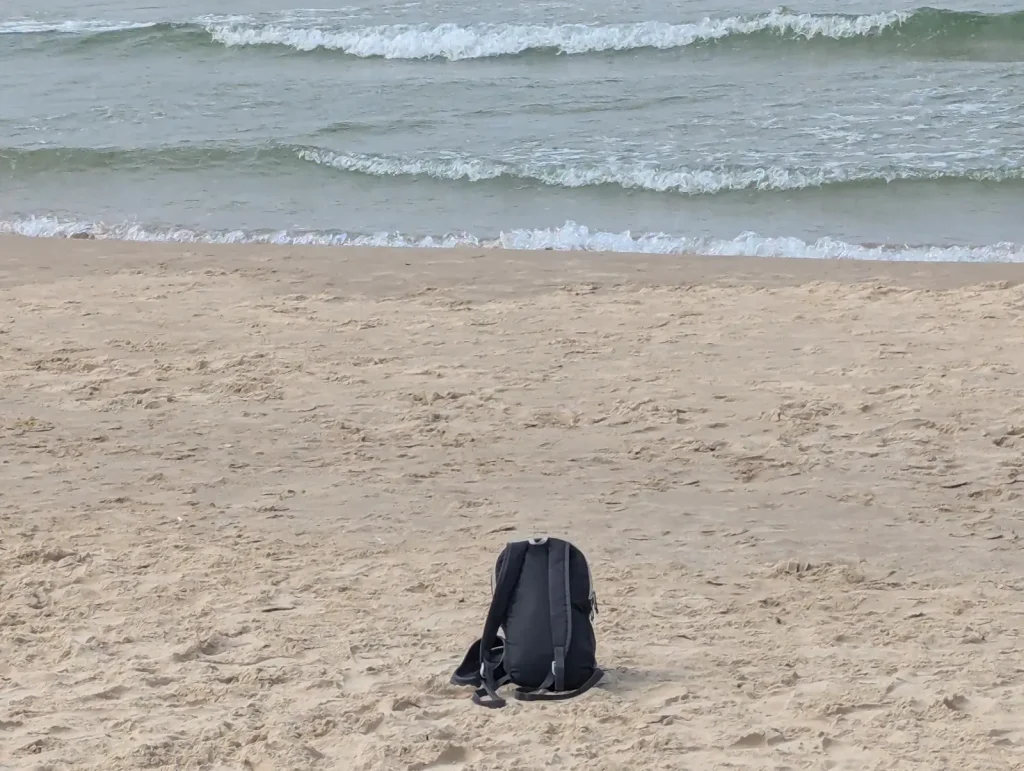
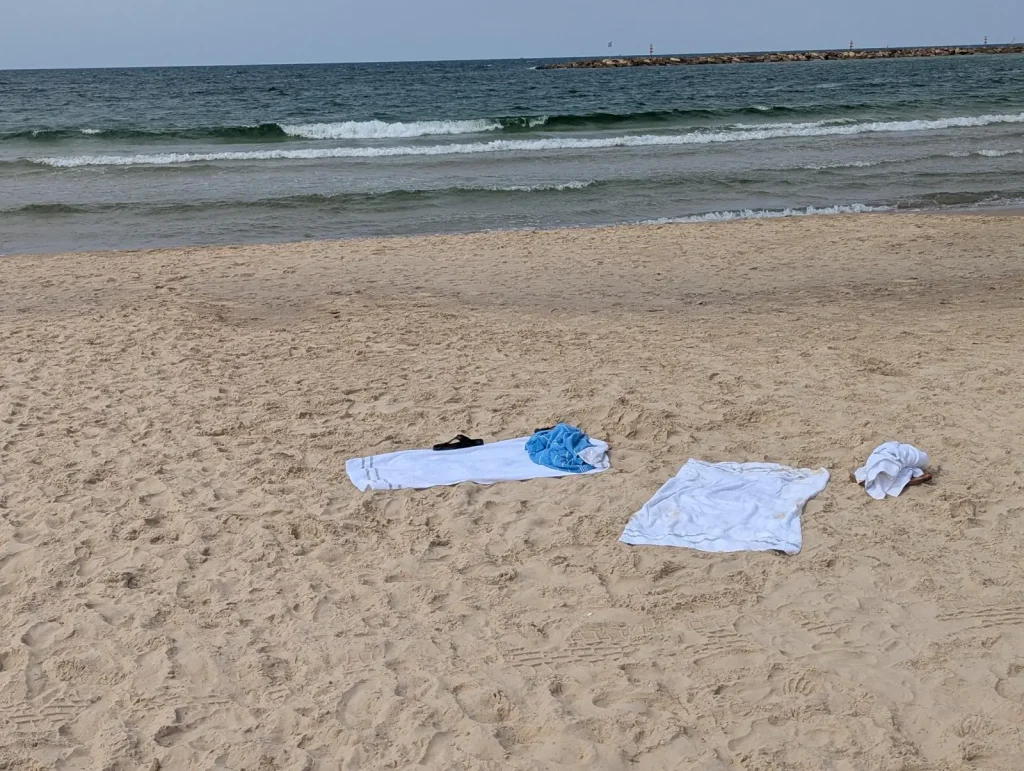
- Never leave valuables unattended on the sand, even for a short swim. Take turns: one person stays with the bags.
- Do not put your phone or keys on top of a towel. Keep them inside a closed bag under your things.
- Use a waterproof pouch if you want your phone with you in the water.
- Choose a spot near other people and near a lifeguard tower, not an empty stretch of sand.
- Photograph what you are carrying before you go, and turn on find-my-phone features.
If something is stolen
- Tell a lifeguard or call the police on 100.
- Block your cards with your bank right away.
- Lock or locate your phone with its find-my-phone feature.
- File a police report at the nearest station; you will usually need it for insurance.
If something is stolen
- Tell a lifeguard or call the police on 100.
- Block your cards with your bank right away.
- Lock or locate your phone with its find-my-phone feature.
- File a police report at the nearest station; you will usually need it for insurance.
Had something taken at a Tel Aviv beach? Tell us the beach, the hour and how it happened, and we will add it here. For storing things while you swim, see our guide to lockers and storage near the beach.
At night
The promenade is well lit and busy into the night, and walking it is safe. On the sand after dark, keep your belongings on you, avoid dark empty stretches if you are alone, and do not leave drinks unattended. Never swim at night: there is no lifeguard.
Police and sirens
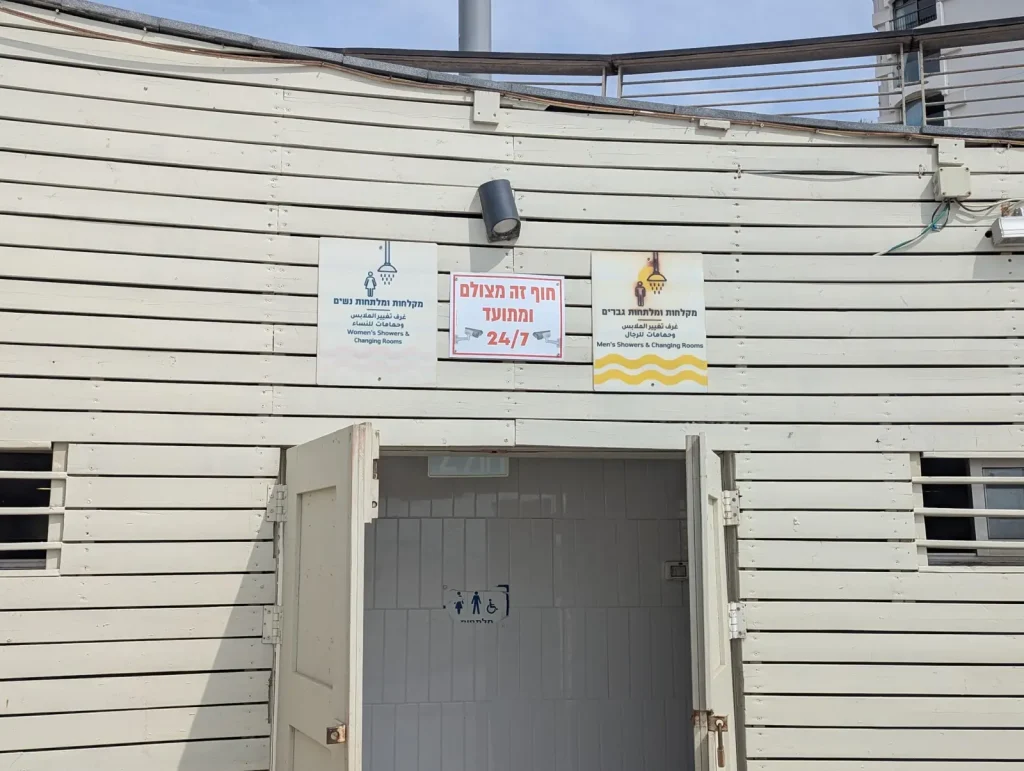
Special police foot patrols for the beaches were set up in 2017, and some beach buildings carry 24/7 camera signs. If you hear a siren, Tel Aviv has 90 seconds to reach shelter; see our guide to shelters near the beach.
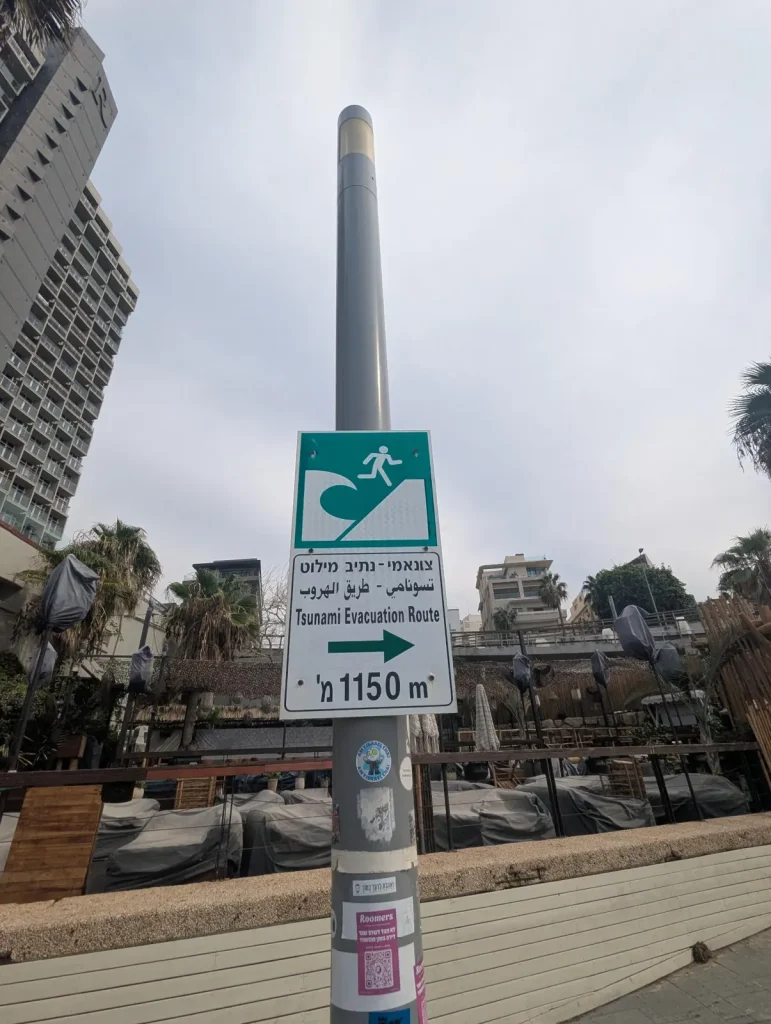
Tsunami evacuation routes
Green tsunami evacuation signs along the promenade and the streets behind it point inland to higher ground and give the distance. The risk is very low, but the signs are worth a glance so you know which way to walk.
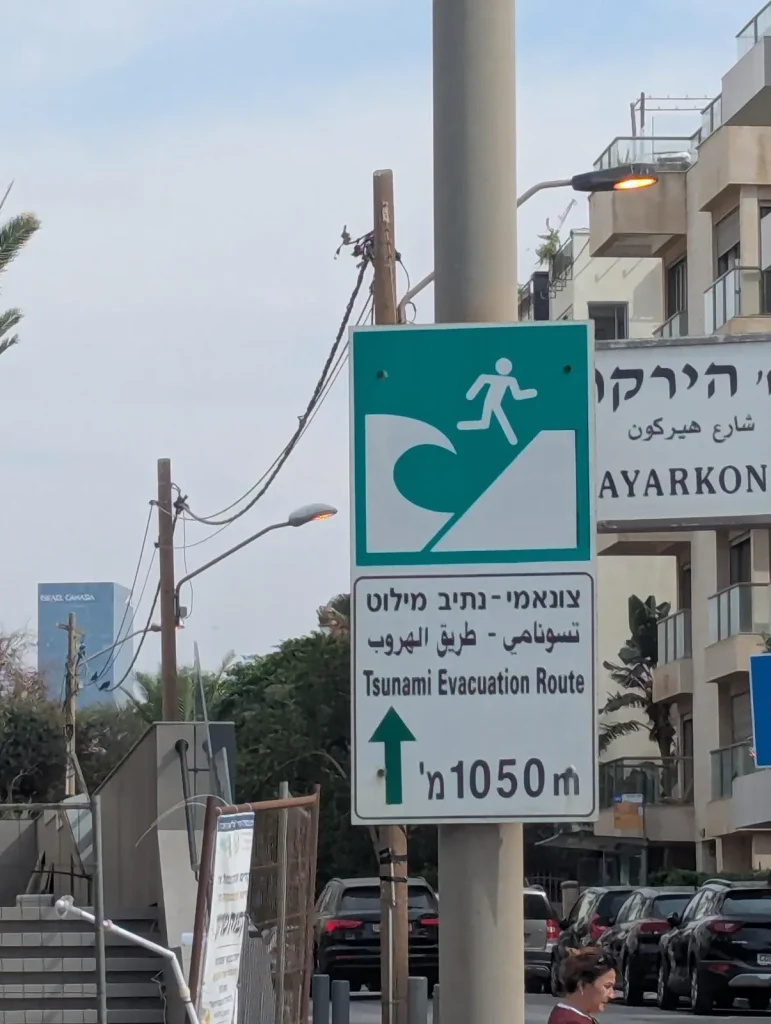
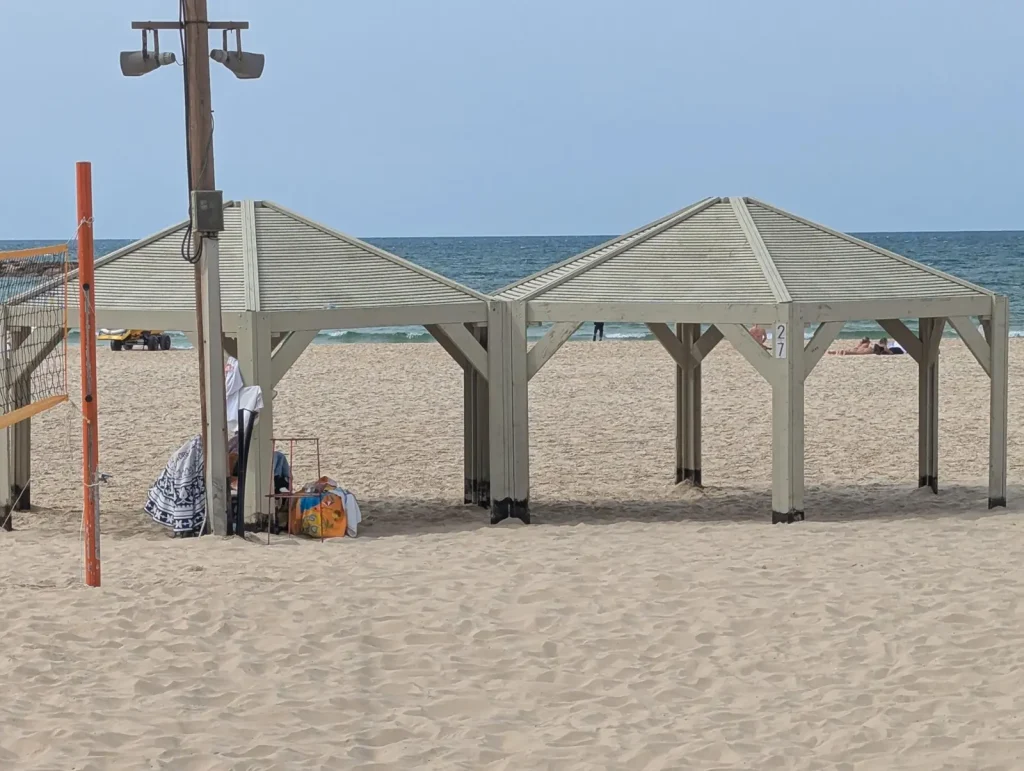
Photos: what gets left on the sand
Taken on a walk along the promenade in October 2026.
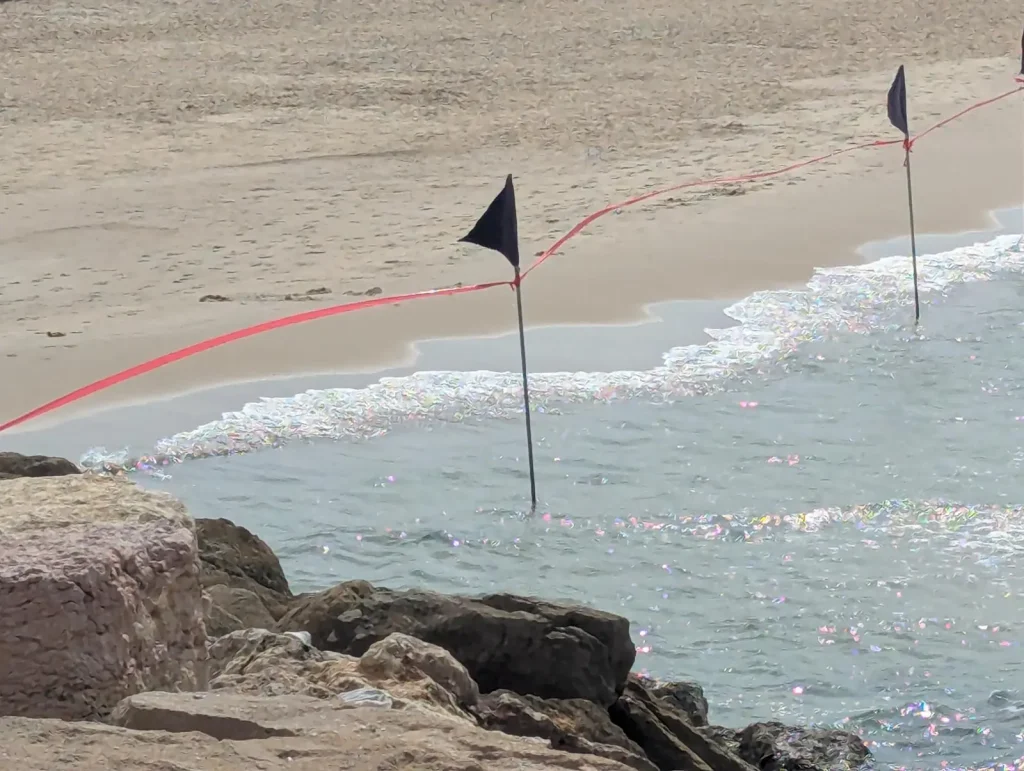
- Do not fight it by swimming toward the shore.
- Swim parallel to the beach until you are out of it.
- Or float and wave for help.
Winter waves can reach about 3 meters, and there are no lifeguards from October to spring.
Source: the Tel Aviv-Yafo Municipality and its chief lifeguards, checked October 2026.
Frequently asked questions
Are Tel Aviv beaches safe?
Yes, by day, if you swim in front of a lifeguard during the bathing season. The real risks are swimming with no lifeguard on duty and leaving bags unattended. Violent crime on the beach is rare.
Who do I call in an emergency?
Police: 100. Ambulance (Magen David Adom): 101. Fire: 102. 112 also works from a mobile phone.
What is the biggest risk to my belongings?
Leaving a phone, wallet or bag on the sand while everyone in your group swims.
Can I swim when there is no lifeguard?
No. Swimming is prohibited when no lifeguard is on duty, and most drownings in Tel Aviv happen outside lifeguard hours. The 2026 bathing season ended on 10 October.
Sources: Maariv on Magen David Adom’s drowning figures (Hebrew), Ynetnews on rip currents, Zalul’s 2024 beach closure summary (Hebrew), the Jerusalem Post on jellyfish first aid, the Times of Israel on the 2025 Hadera shark attack and the Tel Aviv-Yafo Municipality’s lifeguard hours (Hebrew).; OSAC, Israel, the West Bank and Gaza country security report; Jerusalem Post on the Central Bureau of Statistics personal security survey for 2025; Times of Israel, ice cream seller catches beach thieves. Checked October 2026.

Solomon (Shlomo) Wiesen is the author and photographer behind TLV Beaches. Originally from New York, he moved to Israel in 2011 and lives in Tel Aviv, a short walk from Frishman and Bograshov beaches. Every guide on the site is written from the beach, with more than 200 of his own photos of the Tel Aviv coast. He works in marketing, SEO and startups.
Leave a Reply