By Solomon Wiesen, TLV Beaches. Last reviewed October 2026.
Tel Aviv beach pollution is most definitely a thing in 2026! The honest picture: the water is tested every week in the bathing season and is clean enough to swim in on most days, but beaches do get closed, mostly when sewage or rain runoff reaches the sea, and plastic litter is a constant problem.
In fact, the Government shut down the beaches in August 2023 due to pollution! And again in September 2024!
Here is an official Government map of where Tel Aviv sea water is considered safe for bathing levels. Obviously drinking sea water is not advised!!!
At a glance
- Is the water tested? Yes, weekly in the bathing season, by the Health Ministry and the local authorities
- How often does it fail? In 2023 about 4% of samples nationwide were over the limit for enterococci bacteria
- Closures: Tel Aviv had 98 beach closure days across its 13 beaches in 2024, the most of any Israeli city
- Main cause: rain runoff mixed with sewage, and pumping failures
- How to check today: the Health Ministry’s live beach advisory map; a black flag means do not swim
- Blue Flag: Tel Aviv-Yafo’s 13 declared beaches were on the 2026 Blue Flag list
Tel Aviv had the most closure days of any Israeli city, out of 411 nationwide.
More than 7,800 samples were taken nationwide.
Source: Zalul, Ynetnews, the Jerusalem Post and Wikipedia, checked October 2026.
Wait, So What Exactly is Polluting Tel Aviv Beaches?
Three things, mainly: plastic litter and microplastics on the sand; sewage and rain runoff, which push up the bacteria count in the water; and, now and then, oil and tar from ships.
Here is what each one means for a day at the beach – read below!
Plastic Waste on Tel Aviv Shores
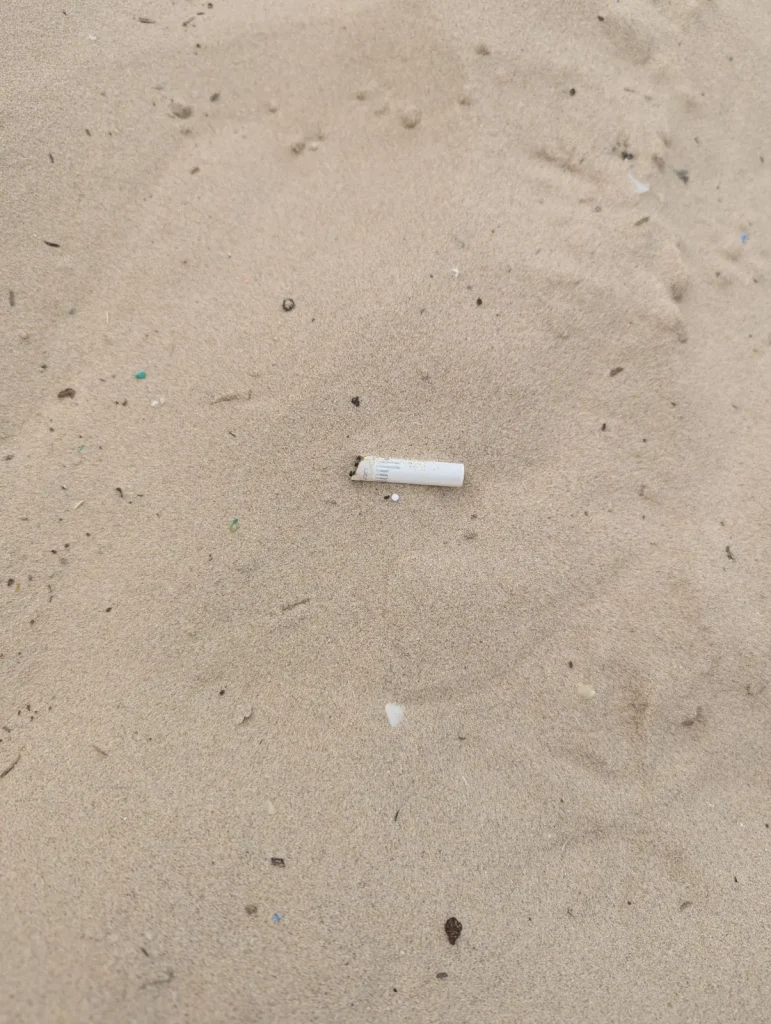
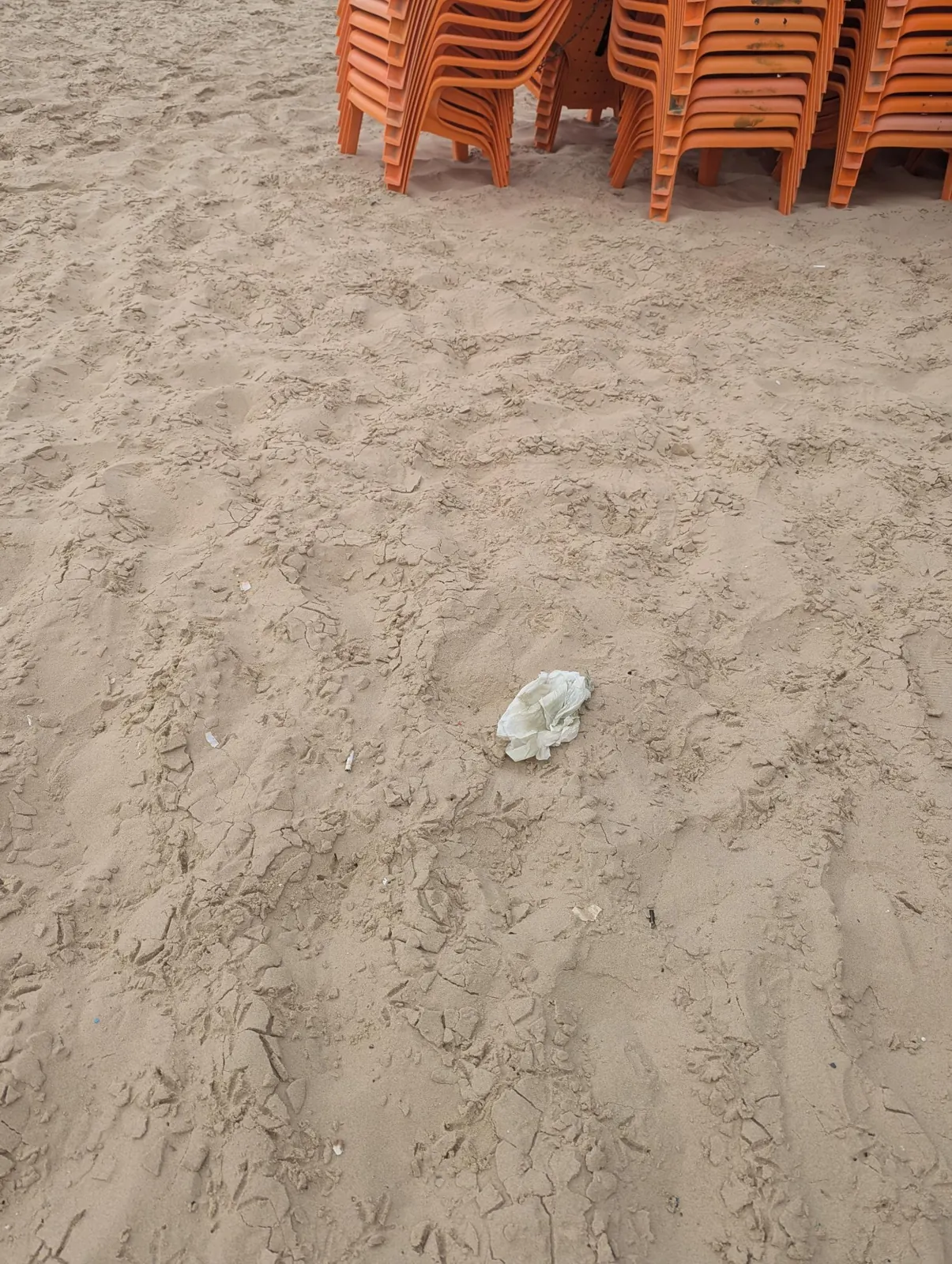
As you stroll along Tel Aviv’s coastline, you’re likely to notice a disturbing reality: plastic waste litters the shores. In fact, a Tel Aviv University study estimated that Israel’s coastline holds about two tons of microplastic! Just terrible.
Beach cleanup initiatives are underway to tackle this issue, but the microplastic presence remains a pressing concern.
You’ll see volunteers collecting trash, but it’s a never-ending battle.
The Impact of Sewage Spills
Tel Aviv’s coastline has a dirty secret: sewage spills. When rain overloads the drains, or a pump fails, runoff mixed with sewage reaches the sea and the bacteria count jumps. The Health Ministry and the local authorities sample the declared beaches every week in season: in 2023 they took more than 7,800 samples nationwide, and about 4% were over the limit for enterococci bacteria. When a beach fails, it is closed until a clean test comes back. In 2024 Israel’s beaches lost 411 beach-days to closures, and Tel Aviv had the most of any city, 98 closure days across its 13 beaches, according to the environmental group Zalul. On 22 November 2024, for example, 11 central Tel Aviv beaches were closed at once.
Chemical Pollution in the Tel Aviv Beach Water
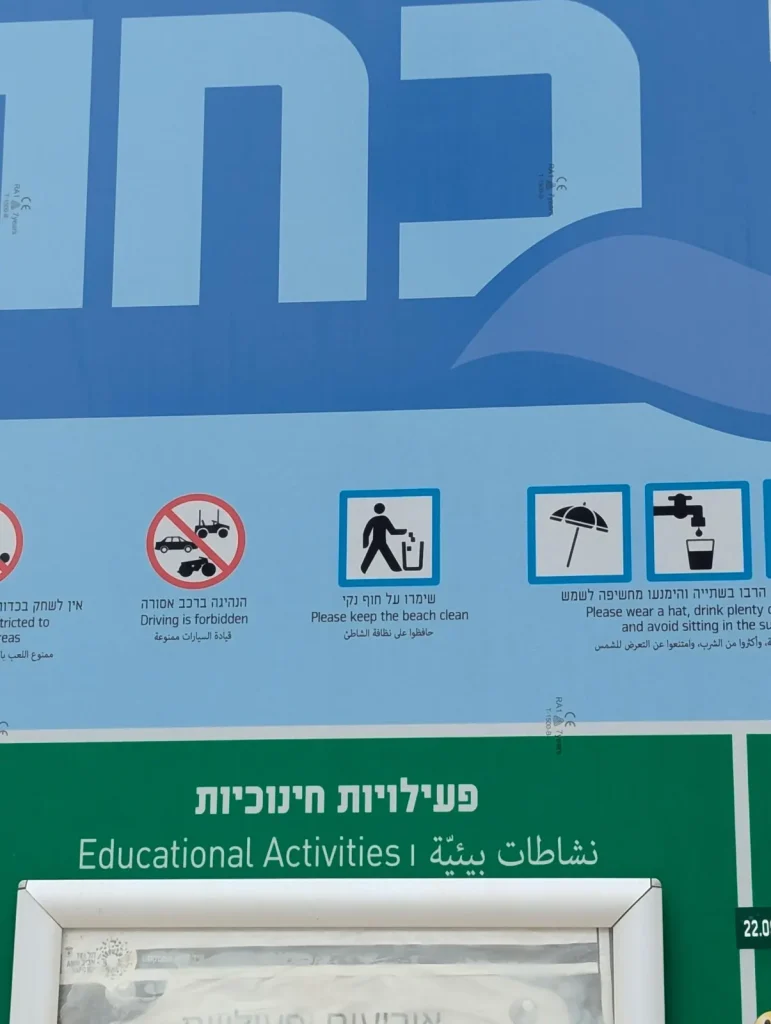
Chemical pollution at Tel Aviv’s beaches is harder to see than litter, and much rarer than a sewage closure.
The biggest recent case was the oil spill of February 2021, which washed tar onto about 160 km of Israel’s coast and kept people off the beaches for weeks. See our page on ocean tar.
Generally we can rely on the Government to warn us: the Health Ministry publishes a live beach advisory map, and closed beaches fly a black flag.
Litter and Debris on TLV Beaches
Scour the shores of Tel Aviv’s beaches and you’ll be met with a disheartening sight:
Litter and debris scattered as far as the eye can see. You’ll notice plastic bottles, food wrappers, and broken glass strewn about, marring the coastal aesthetics and compromising beach cleanliness. There is a culture of littering unfortunately and we all need to help to fix this!
- Weekly tests in the bathing season by the Health Ministry and local authorities.
- A failed test closes the beach.
- A clean test reopens it.
Source: Zalul, the Health Ministry and a Tel Aviv University study, checked October 2026.
What the official notices and annual figures say
Beach closures follow Health Ministry swimming warnings. Below are dated notices and annual figures we could confirm from published reports. They describe the water as the authorities and monitors reported it; they are not our own measurements. For today’s status, use the Health Ministry’s live beach advisory map.
| Reported | Notice | Source |
|---|---|---|
| 25 Dec 2022 | Health Ministry closed beaches in Tel Aviv, Bat Yam and Herzliya after heavy rain pushed rainwater and street runoff into the sewage system, which was released into the sea. The warning stood until the rain stopped and water levels returned to normal. | The Jerusalem Post |
| 28 Dec 2025 | Health Ministry issued a swimming warning for Tel Aviv beaches over sewage overflow into the Yarkon River and its flow into the sea. | Ynetnews |
| 5 Jan 2026 | The warning at Cliff Beach was lifted. It stayed in effect at Jerusalem Beach and at the separate beach. | Ynetnews |
Zalul, an Israeli environmental group, counted 98 closure days in Tel Aviv in 2024 across its 13 beaches, the most of any city. Herzliya had 22 across 8 beaches, Bat Yam 4 across 8, and Rishon LeZion 2 across 6 (Zalul annual summary, April 2025).
In the Health Ministry’s 2023 monitoring, 4.1% of samples nationwide were abnormal for fecal enterococci and 3.2% for fecal coliform. Tel Aviv beaches had the highest fecal coliform findings, while Hadera, Netanya and Rishon LeZion beaches showed none (Ynetnews, July 2024).
Closure days counted by Zalul, an Israeli environmental group.
Zalul's own counts add up to 413 days against its stated total of 411, so treat the shares as approximate.
Source: Zalul annual summary, published 6 April 2025.
Effects on Mediterranean Marine Life and Humans
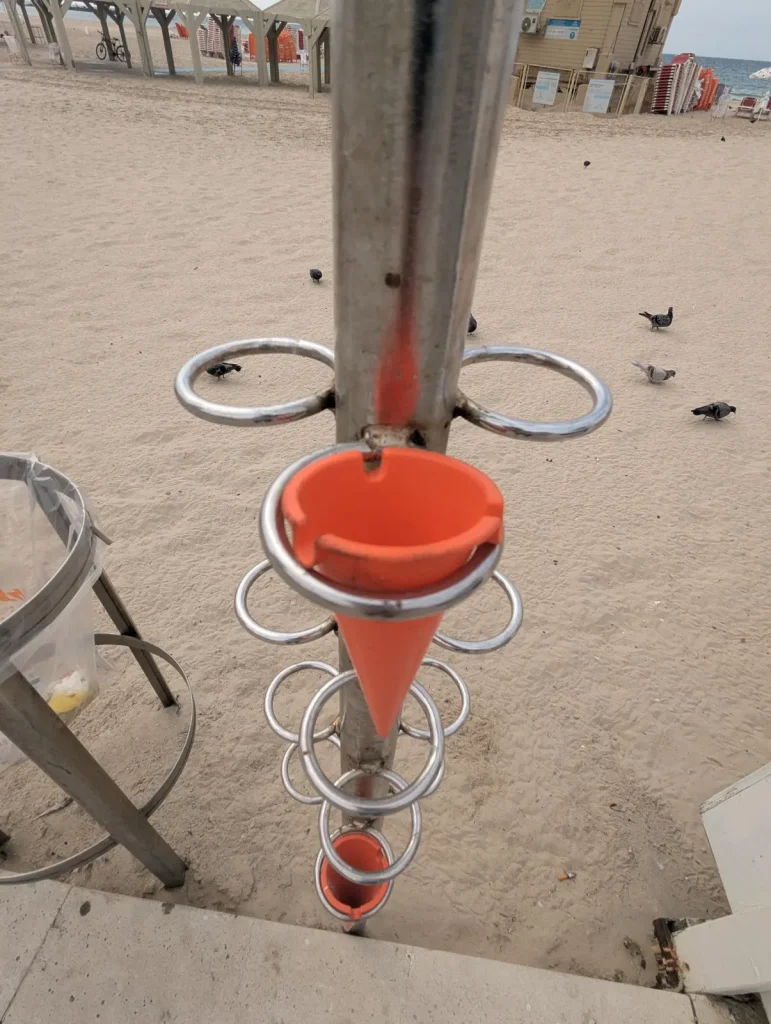
As you walk along the beach, the trash you see is only part of it. Pollution also hits Middle East marine life and human health. Marine animals ingest plastic, causing blockages and nutrient deficiencies. Noise pollution from human activities (there is a lot of that on Tel Aviv beaches!) disrupts their communication and behavior.
Here is the TLDR on Tel Aviv Beach Pollution.
The pollution facts about Tel Aviv beaches are not great. However we can swim in the sea, because the government will warn us when it is too polluted.
What can we do to fix it? Stop littering!
Sources: Ynetnews on the Health Ministry’s water sampling, Zalul’s 2024 beach closure summary (Hebrew), the Jerusalem Post on the November 2024 closures, the Jerusalem Post on the 2026 Blue Flag list, Wikipedia on the 2021 oil spill and the reports linked in the text. Checked October 2026.

Solomon (Shlomo) Wiesen is the author and photographer behind TLV Beaches. Originally from New York, he moved to Israel in 2011 and lives in Tel Aviv, a short walk from Frishman and Bograshov beaches. Every guide on the site is written from the beach, with more than 200 of his own photos of the Tel Aviv coast. He works in marketing, SEO and startups.
Leave a Reply